
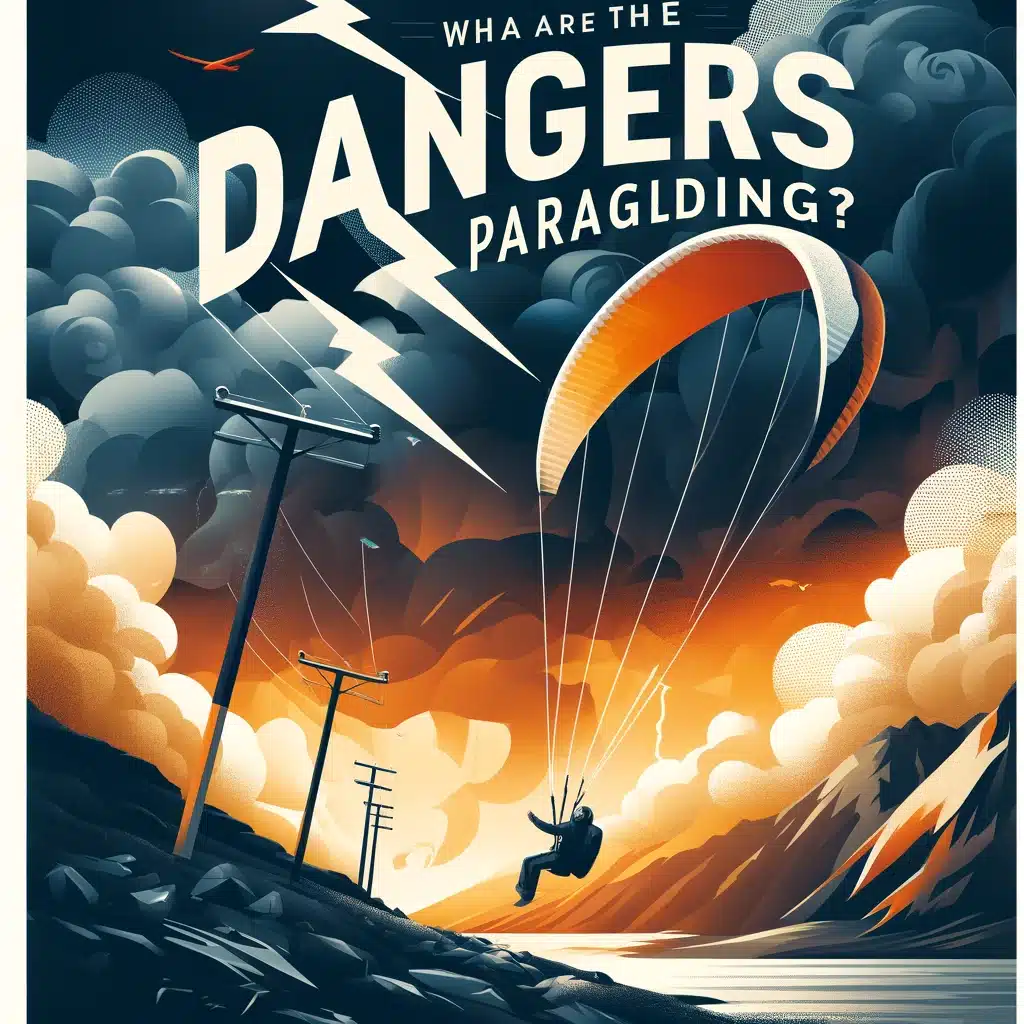
Paragliding is an adventurous sport that offers breathtaking views and the exhilarating sensation of flying. However, like all adventure sports, it comes with its own set of risks that can pose serious dangers to its participants. These risks range from unpredictable weather conditions and equipment malfunctions to human errors in judgment or technique. Understanding these risks is crucial for every paraglider, whether novice or experienced. This content will not only outline the common dangers associated with paragliding but will also provide practical guidance on how to mitigate these risks, ensuring a safer and more enjoyable flying experience.
accident report
Based on the search results, the most common causes of paragliding accidents are:
- Pilot error, such as making mistakes during launch, turning the wrong way, or not respecting the dangers of the launch site. Pilot error is cited as the leading cause of paragliding accidents.
- Equipment failure, such as sudden wing closures, misalignment of ropes, and issues with the paramotor engine (e.g. contact with the propeller, hot engine parts, or fuel combustion). Adverse weather conditions, including turbulence, reverse winds, and air instability that can catch pilots off guard.
- Lack of experience and training, with statistics showing that 40% of fatal accidents involve pilots with less than 100 hours of experience, and 75% of those who experienced an accident had 10 or more years of practice
The search results emphasize that paragliding accidents often involve a combination of these factors, highlighting the need for thorough preparation, safety protocols, and vigilance to minimize the risks associated with this activity
why proper training is important?

Most paragliding accidents can be attributed to a lack of skills, rather than simply the number of hours spent flying. Effective and comprehensive training is key to developing the necessary skills for safe paragliding. Oceanwings Paragliding School addresses this issue directly with its improved training program, which focuses on equipping pilots with the right skills from the start. This approach emphasizes quality over quantity, ensuring that pilots are thoroughly prepared for various flying conditions and scenarios, regardless of their total flight hours. By choosing a reputable school like Oceanwings, aspiring paragliders can gain the essential skills needed to minimize risks and enhance their flying experience.
Main skills for paragliding safely
-
Take Off: Proper take-off is crucial. It involves laying out the wing correctly, ensuring that lines are not tangled, and that the wind fills the wing properly for inflation. The pilot must also execute a controlled run or launch, depending on the slope and wind conditions, to get into the air smoothly.
-
In-Flight Maneuvers: Once airborne, a pilot must have good canopy control. This includes the ability to turn efficiently, manage speed, and adjust altitude while responding to varying air conditions (like thermals and turbulence).
-
Landing: Safe landing requires choosing a suitable landing zone that is clear of obstacles and has appropriate wind conditions. The pilot must execute a proper approach pattern, manage descent rate, and flare the wing at the right moment to land gently.
-
Landing in Water (Ditching): In the event that a water landing is unavoidable, a pilot needs to know how to unfasten the harness quickly upon touchdown to avoid getting trapped underwater. It’s also essential to be aware of how to steer away from water if possible and to understand the behavior of the wing in water.
-
Reserve Parachute Deployment Training: Pilots must know how to deploy the reserve parachute in case of an emergency. This includes recognizing when it’s necessary and being proficient in the deployment process to avoid panic in critical situations.
-
Accurate Control: This covers precision flying, such as making fine adjustments to the glider to navigate through complex air movements and handling unexpected situations such as wind shifts or encountering air traffic.